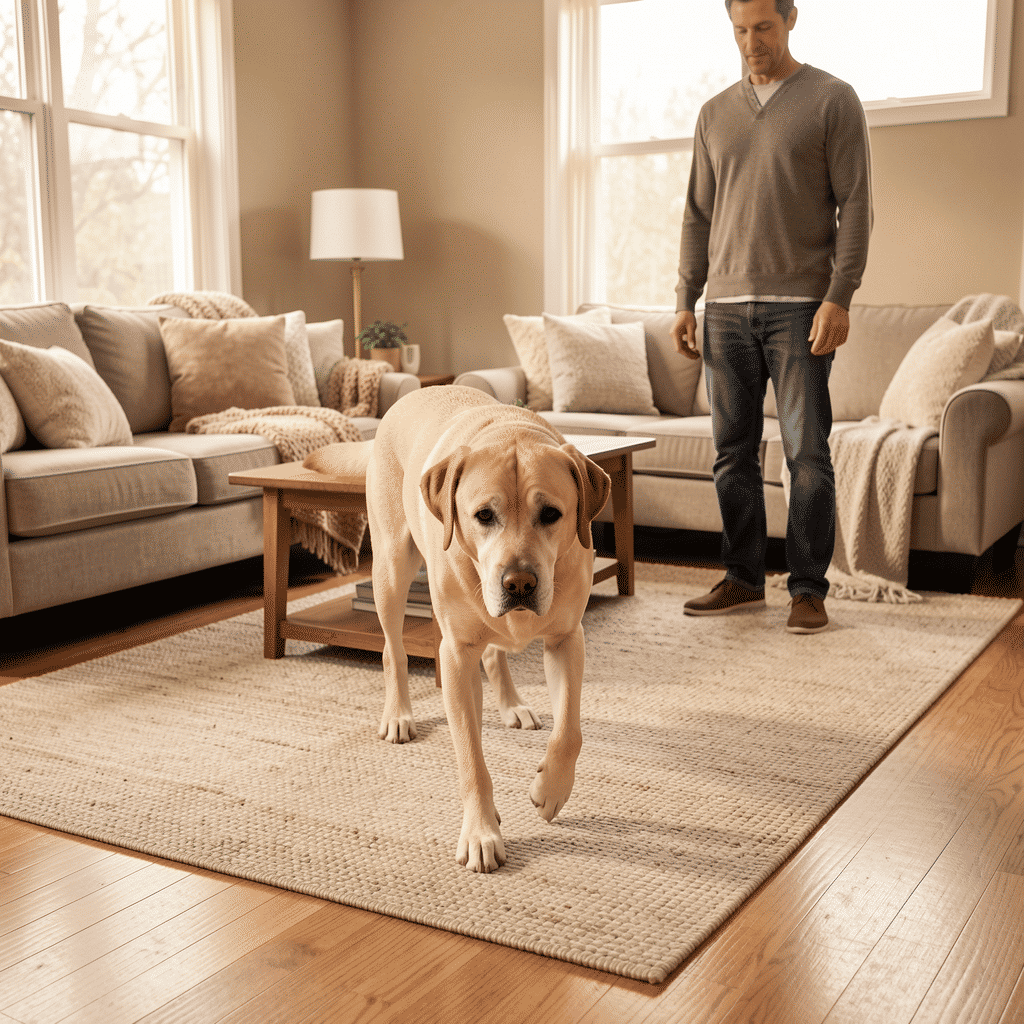
As our beloved dogs grow older, their mobility can decline, which may make navigating certain types of flooring more challenging. Slippery surfaces like hardwood, laminate, or tile floors can pose a significant risk for falls and injuries. Fortunately, there are several effective strategies you can implement to help your older dog walk safely.
Use Non-Slip Rugs or Carpet Runners
One of the simplest ways to provide traction is by placing non-slip rugs or carpet runners in areas your dog frequently travels. This is particularly important in hallways and near doorways where your dog is likely to move quickly. Choose rugs with a rubber backing to ensure they stay in place and provide adequate grip.
Invest in Non-Skid Socks or Booties
Non-skid socks or booties designed for dogs are another excellent solution. These products have rubberized soles that improve traction, helping your dog maintain firm footing even on slick surfaces. Make sure to select the correct size and allow your dog some time to adjust to wearing them.
Trim Their Nails Regularly
Keeping your dog's nails neatly trimmed can improve their ability to walk on slick surfaces. Long nails can make it harder for dogs to gain traction. Consult your veterinarian or a professional groomer for advice on trimming nails if you're unsure how to do it safely.
Consider Mobility Aids
For dogs struggling significantly with mobility, certain aids, like harnesses with lifting support or mobility slings, can help. These products allow you to assist your dog over particularly challenging areas. They can also provide relief to dogs experiencing joint discomfort or muscle weakness.
Create a Safe Resting Area
Ensure your dog has a comfortable and secure resting area. Placing non-slip mats beneath their bed or blanket can prevent unwanted movement when they try to stand or reposition themselves. A supportive dog bed designed for older pets can also provide additional comfort.
Maintain a Healthy Weight and Exercise Routine
Keeping your dog at a healthy weight can reduce the strain on their joints, making movement easier. Regular, gentle exercise is also vital for maintaining muscle mass and joint flexibility. Consult your veterinarian for personalized exercise recommendations suitable for your dog’s age and health condition.
Consider Physical Therapy
If your older dog is having significant mobility issues, you might consider seeking the advice of a veterinary physical therapist. They can design a program tailored to your dog's specific needs, which may include exercises to build strength, improve balance, and increase joint mobility.
By implementing these strategies, you can help ensure that your older dog remains safe and comfortable in your home. Taking proactive measures not only reduces the risk of accidents but also enhances your dog's quality of life as they age gracefully.